Free Anglican Music Generator Powered by AI
Turn text into high-quality Anglican music effortlessly – no login required!

music.toolTips
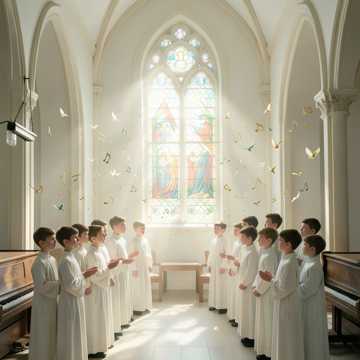
A Psalm of thanksgiving
A jubilant hymn of thanksgiving, calling all to praise and bless the Lord with glad hearts, celebrating His mercy and faithfulness through an uplifting all-boys choir performance.
00:59
Invalid date

A Psalm of thanksgiving
A vibrant, keyboard-led Anglican praise song calling all to joyfully serve and thank the LORD, highlighting His enduring mercy and faithfulness across generations.
00:55
Invalid date

A Psalm of thanksgiving
A vibrant children's choir hymn celebrating gratitude and the enduring goodness of the Lord, combining joyful melodies with angelic harmonies.
01:10
Invalid date
Introduction to Anglican Music: Definition and History
Anglican music refers to the sacred and choral music tradition associated with the Anglican Church, which originated in England during the 16th century. This music style is deeply intertwined with Anglican liturgy, including the Book of Common Prayer, and has been shaped by centuries of religious, cultural, and musical evolution. The roots of Anglican music trace back to Gregorian chant and Renaissance polyphony, evolving through the Baroque, Classical, and Romantic periods. Notable for its emphasis on choral harmony, text clarity, and solemn yet expressive musicality, Anglican music remains a cornerstone of Western sacred music traditions and continues to influence modern church compositions worldwide.
Sub-tags and Classifications of Anglican Music
Choral Anglican
Choral Anglican music is the most recognized form of Anglican music, characterized byAnglican Music Overview choir-driven compositions, often performed a cappella or with organ accompaniment. It emphasizes harmonious blending of voices, careful attention to textual clarity, and the use of traditional liturgical forms such as anthems, canticles, and motets.
Anglican Chant
Anglican chant is a style of singing psalms and biblical texts using a simple, syllabic, and melodic chant pattern. It is designed to fit the natural rhythms of English speech and often features alternation between soloist and choir, creating a meditative and reverent atmosphere.
Service Music
Service music in the Anglican tradition includes compositions specifically designed for liturgical use, such as the Morning and Evening Prayer services, the Holy Communion, and the Magnificat and Nunc Dimittis. These works are notable for structured form, balanced voice textures, and alignment with specific liturgical texts.
Hymnody
Anglican hymnody refers to congregational singing in the Anglican Church, including both traditional hymns and modern compositions. It emphasizes theological clarity, melodic accessibility, and often incorporates rich harmonies suitable for organ accompaniment or choir support.
Famous Artists and Works in Anglican Music
Thomas Tallis
Thomas Tallis (c.1505–1585) is one of the most prominent composers of early Anglican music. His works, including 'Spem in alium' and various motets, showcase mastery of polyphony, complex vocal harmonies, and innovative use of counterpoint that influenced generations of Anglican composers.
Spem in alium by Thomas Tallis
This 40-part motet is a landmark in Anglican choral music, demonstrating Tallis’s mastery of polyphony and spatial vocal arrangement. Each choir interacts intricately with the others, creating a cascading, immersive sound that remains unparalleled in sacred music.
William Byrd
William Byrd (1540–1623) contributed extensively to Anglican music with compositions that blend rich polyphonic textures and devotional depth. His anthems and service settings remain central to Anglican choral repertoires.
Evening Service in B flat by Herbert Howells
Howells’s Evening Service in B flat is celebrated for its lush harmonies, expressive melodic lines, and sensitive treatment of the text. It exemplifies 20th-century Anglican choral sophistication and is widely performed in cathedrals and collegiate chapels.
Herbert Howells
Herbert Howells (1892–1983) is renowned for his 20th-century Anglican choral compositions, including service music like 'Magnificat and Nunc Dimittis' and anthems that combine lush harmonies with expressive melodic lines.
Te Deum in C by Charles Villiers Stanford
Stanford’s Te Deum in C showcases the balance between formal structure and melodic richness in Anglican service music. The work’s accessibility for both choir and congregation ensures its lasting popularity in worship services.
Charles Villiers Stanford
Charles Villiers Stanford (1852–1924) revitalized Anglican music with anthems, canticles, and hymn tunes that emphasize formal elegance, harmonic richness, and congregational accessibility.
Application Scenarios of Anglican Music
Anglican music is primarily used in church services, including Eucharist, Evensong, and special liturgical celebrations. Its structured harmonies and sacred texts enhance worship, providing a spiritually uplifting experience for congregations.
Church Services
The rich, solemn qualities of Anglican choral music make it ideal for film and television soundtracks, particularly in scenes requiring grandeur, reflection, or a historical English ambiance.
Film and Television Soundtracks
Anglican music’s serene and majestic tones are occasionally used in advertising, especially for luxury, heritage, or cultural brands, evoking feelings of tradition, reverence, and refinement.
Advertising and Commercial Media
In video games, Anglican-style music is used to create immersive atmospheres in settings like cathedrals, castles, or historical environments, enhancing the narrative with spiritual and emotional depth.
Video Game Background Music