Free Tres Guitar Music Generator Powered by AI
Turn text into high-quality Tres Guitar music effortlessly – no login required!

music.toolTips

Brisa de Barlovento
Canción romántica que retrata un encuentro junto al mar donde el amor disipa la soledad. Entre olas, noches de malecón y recuerdos luminosos, la narración celebra la felicidad sencilla, la esperanza y la conexión emocional con una sensibilidad costera y nostálgica.
03:49
1 days ago

Marea de Azúcar
Canción romántica de son cubano vintage que narra cómo un amor transforma el rumbo emocional del protagonista. Entre imágenes del mar, La Habana y la noche, la obra combina ternura, nostalgia y devoción amorosa con una sensibilidad cálida y atemporal.
03:40
1 days ago
Ay Changüí
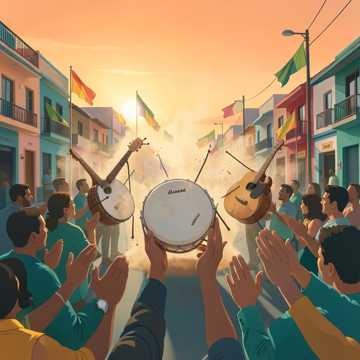
A lively instrumental celebration of Cuban changüí, driven by marímbula, bongó, tres, güiro, and maracas. Its fast pulse, syncopated swing, and communal energy evoke rural festivities, dance gatherings, and the joyful spirit of traditional eastern Cuba.
02:05
5 days ago
Tres Guitar: Definition, Origins, History, and Musical Evolution
Tres Guitar, more accurately known as the Cuban Tres, is a traditional stringed instrument that plays a central role in Cuban music and many Afro-Cuban musical styles. The Tres is characterized by three courses of double strings, giving it six strings arranged in pairs. Unlike a standard guitar, the Tres produces a bright, rhythmic, and highly percussive sound that is ideal for melodic improvisation and syncopated accompaniment patterns known as guajeos. The origins of the Tres Guitar can be traced back to eastern Cuba during the 19th century, where Spanish string instruments merged with African rhythmic traditions. Over time, the Tres became a defining instrument in genres such as Son Cubano, Changüí, Guaracha, Salsa, and Latin Jazz. During the early 20th century, the rise of Son Cubano helped popularize the Tres throughout Cuba and eventually across Latin America and the world. Today, Tres Guitar music remains a vital component of traditional Cuban ensembles while also influencing contemporary Latin, world music, jazz fusion, and global crossover productions. The instrumentTres Guitar Overview's unique blend of melody, rhythm, and harmonic support makes Tres Guitar one of the most distinctive sounds in Latin music history.
Tres Guitar Sub-tags and Classifications
Traditional Cuban Tres
Traditional Cuban Tres represents the classic style developed within Son Cubano and Changüí ensembles. This category focuses on authentic rhythmic accompaniment, intricate guajeo patterns, and traditional tuning systems. The music emphasizes interaction between percussion, vocals, and the Tres Guitar, preserving the instrument's historical and cultural roots.
Son Cubano Tres
Son Cubano Tres is the most widely recognized Tres Guitar style. It features syncopated rhythmic motifs, melodic counterpoint, and improvisational phrases that drive the ensemble's groove. The Tres Guitar serves as both a rhythmic foundation and a melodic lead instrument, making it indispensable to classic Son recordings.
Changüí Tres
Changüí Tres focuses on one of the oldest forms of Cuban rural music. The playing style is highly rhythmic, featuring rapid picking techniques and improvisational passages. Compared to Son Cubano, Changüí Tres often exhibits a rawer, more energetic sound that highlights the African influences within Cuban musical traditions.
Salsa Tres
Salsa Tres adapts traditional Tres Guitar techniques for modern salsa orchestras and dance bands. Musicians often expand harmonic vocabulary while maintaining characteristic Cuban rhythmic patterns. The Tres Guitar adds texture, rhythmic complexity, and cultural authenticity to contemporary salsa arrangements.
Latin Jazz Tres
Latin Jazz Tres combines traditional Cuban techniques with jazz harmony, improvisation, and advanced musical structures. Players often experiment with extended chords, modal improvisation, and fusion-oriented arrangements, demonstrating the versatility of the Tres Guitar in sophisticated musical contexts.
Contemporary Fusion Tres
Contemporary Fusion Tres incorporates elements from world music, pop, rock, funk, and electronic genres. Artists in this category use the Tres Guitar as a bridge between traditional Cuban heritage and modern global music production, expanding its audience and creative possibilities.
Acoustic Solo Tres
Acoustic Solo Tres focuses on the instrument as a standalone performance medium. Musicians explore fingerstyle techniques, solo arrangements, and virtuosic improvisation, showcasing the melodic and harmonic capabilities of the Tres Guitar beyond ensemble settings.
Famous Tres Guitar Artists and Classic Works
Arsenio Rodríguez
Widely regarded as one of the most influential Tres Guitar masters in history, Arsenio Rodríguez revolutionized Son Cubano through innovative Tres arrangements, sophisticated harmonic structures, and expanded ensemble formats. His work elevated the Tres Guitar from an accompaniment instrument to a major creative force in Cuban music.
Bruca Maniguá
Associated with Arsenio Rodríguez, this landmark work showcases the Tres Guitar's ability to combine rhythmic drive with melodic sophistication. The composition demonstrates advanced guajeo structures and innovative ensemble interaction that influenced generations of Cuban musicians.
Ñico Saquito
A celebrated Cuban composer and Tres player, Ñico Saquito helped popularize traditional Cuban song forms through memorable melodies and rhythmic Tres Guitar accompaniment. His contributions remain fundamental to the development of Cuban popular music.
Dundunbanza
This classic recording highlights the expressive capabilities of the Tres Guitar through intricate rhythmic phrasing and memorable melodic development. The piece represents a major milestone in the evolution of Son Cubano and Afro-Cuban music.
Pancho Amat
Pancho Amat is one of the most respected contemporary Tres Guitar performers. He has preserved traditional techniques while introducing the instrument to new audiences through collaborations, educational initiatives, and innovative recordings.
Chan Chan
Popularized globally through the Buena Vista Social Club project, Chan Chan features characteristic Cuban string textures and traditional rhythmic foundations. The work introduced many international listeners to the sound world surrounding the Tres Guitar and traditional Cuban music.
Eliades Ochoa
Known internationally through the Buena Vista Social Club movement, Eliades Ochoa has helped introduce Tres Guitar traditions to global audiences. His performances blend traditional Cuban roots with accessible modern interpretations.
El Cuarto de Tula
Known for its energetic performance style and infectious groove, this classic work demonstrates how Tres Guitar patterns interact with vocals and percussion to create dynamic ensemble textures. Its international success contributed to renewed interest in traditional Cuban instruments.
Polo Montañez
Although known primarily as a singer-songwriter, Polo Montañez incorporated Tres Guitar elements into his music, helping preserve rural Cuban musical traditions and expanding their popularity among contemporary listeners.
Son de la Loma
One of the most celebrated pieces in Cuban music history, Son de la Loma showcases elegant Tres Guitar accompaniment and melodic interplay. The work remains an essential reference for understanding traditional Son Cubano performance practice.
Barbarito Torres
Barbarito Torres is internationally recognized for his virtuosic Tres Guitar performances. His technical mastery and expressive playing style have made him one of the most prominent ambassadors of Cuban Tres music worldwide.
Bilongo
This influential Afro-Cuban composition illustrates the Tres Guitar's role in supporting complex rhythmic frameworks while providing memorable melodic hooks. Its enduring popularity highlights the instrument's central role in Cuban musical identity.
Tres Guitar Music Application Scenarios
Tres Guitar music is frequently used in films that depict Latin American culture, Caribbean settings, historical narratives, and travel experiences. Its warm acoustic tone and rhythmic vitality help establish an authentic cultural atmosphere and emotional depth.
Film Soundtracks
Documentaries about Cuba, Afro-Cuban heritage, world music, and cultural history often feature Tres Guitar music to provide regional authenticity and reinforce historical storytelling.
Television and Documentary Productions
Brands seeking vibrant, energetic, and culturally rich soundtracks use Tres Guitar music in advertisements related to travel, food, beverages, tourism, and lifestyle products. The instrument evokes warmth, authenticity, and celebration.
Advertising and Brand Campaigns
Game developers incorporate Tres Guitar music into exploration games, adventure titles, cultural simulations, and Caribbean-themed environments. The instrument helps create immersive and memorable world-building experiences.
Video Game Background Music
Latin restaurants, resorts, hotels, and hospitality venues use Tres Guitar music to create a welcoming atmosphere that reflects Caribbean and Cuban cultural traditions. Its rhythmic character encourages relaxation and social interaction.
Restaurant and Hospitality Ambience
Tres Guitar music serves as a foundational element in salsa, son, and folkloric dance performances. Festivals celebrating Latin music frequently feature Tres ensembles to showcase traditional and contemporary interpretations of Cuban culture.
Dance Performances and Festivals
Modern world music festivals and fusion concerts use Tres Guitar performances to connect traditional Cuban sounds with jazz, funk, electronic, and global musical traditions, attracting diverse international audiences.
World Music and Fusion Concerts
Universities, music schools, and cultural institutions use Tres Guitar music in workshops, lectures, and educational programs focused on Latin music history, ethnomusicology, and performance studies.
Educational and Cultural Programs