Free Liturgical Music Generator Powered by AI
Turn text into high-quality Liturgical music effortlessly – no login required!

music.toolTips
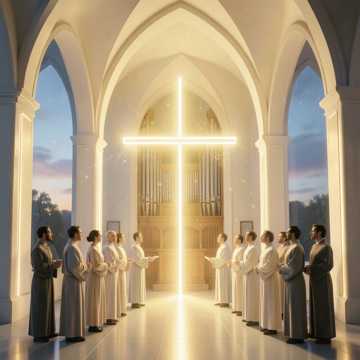
Santo é
Uma composição instrumental litúrgica que evoca reverência, contemplação e devoção. Sustentada por harmonias corais SATB, órgão ou piano delicado e ampla reverberação de catedral, cria uma atmosfera sagrada, íntima eJSON Error Analysis majestosa centrada na adoração.
06:34
9 hours ago
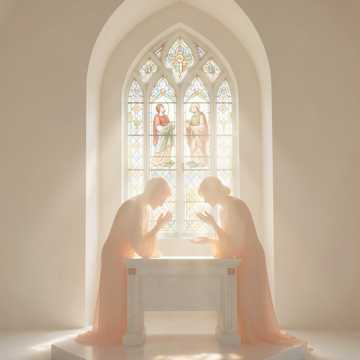
Poranna Modlitwa
Krótka, kontemplacyjna modlitwa muzyczna skierowana do wiernych na początek dnia. Utwór przekazuje błogosławieństwo, prośbę o Boże prowadzenie i wewnętrzny pokój, wykorzystując subtelny a cappella śpiew oraz spokojną, sakralną atmosferę.
01:40
15 hours ago
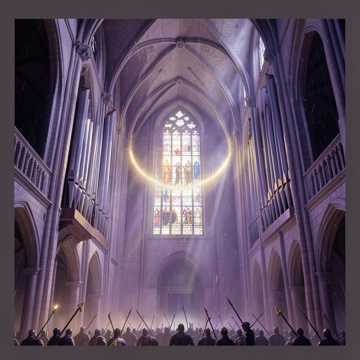
Sanctus Michael
An epic Gregorian-inspired instrumental honoring the spiritual and martial symbolism of Saint Michael. Deep organ tones, monastic drones, distant bells, and soaring cathedral resonance create a solemn atmosphere that gradually ascends into a monumental expression of sacred power.
03:40
19 hours ago
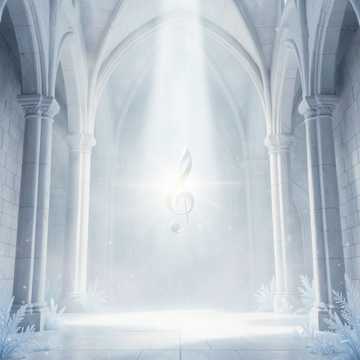
Люменаро
Люменаро — це духовна вокальна медитація про поклик до недосяжного світла. Самотній голос звертається до таємничого Луменаро крізь холод і відстань, поступово знаходячи відповідь у сяйві, внутрішньому просвітленні та тихому вознесінні.
07:30
1 days ago
Tubuh Darah
Tubuh Darah merupakan himne Katolik liturgis yang mengangkat misteri Ekaristi melalui lirik yang sederhana namun mendalam. Dengan harmoni paduan suara SATB, organ gereja yang megah, dan suasana katedral yang khusyuk, lagu ini menyampaikan kasih Kristus, perjanjian baru, serta janji kehidupan kekal bagi umat beriman.
03:40
2 days ago

Kamay Sa Alon
Isang liturgical worship ballad tungkol sa pagkalunod sa dilim at muling pagbangon sa pamamagitan ng pag-abot ng kamay ng Diyos. Inilalarawan nito ang pag-asa, biyaya, at paghilom ng pusong sugatan sa gitna ng espiritwal na pakikipagtagpo at pananampalataya.
04:17
Invalid date

Sa Pasimula
Isang taimtim na awiting pagsamba na muling isinasalaysay ang kuwento ng paglikha sa Genesis. Sa pamamagitan ng maringal na koro at mapagnilay na himig, ipinagdiriwang nito ang kapangyarihan ng Diyos na lumikha ng liwanag, kaayusan, at buhay.
05:43
Invalid date
Sa Unang Paghugos
An kanta nagsasaysay kan biblikal na paglalang, kun saen an Dios naggamit kan Iyang tataramon tanganing magkaigwa nin salang, aldaw, bulan, bitoon, asin gabos na bahagi kan kinaban. Isa ini ka sagradong himno nin pagdayaw sa kapangyarihan asin kadakulaan kan Dios.
03:22
Invalid date
13
Глибока покаянна молитва до Ангела-Хранителя, сповнена каяття, смирення та прагнення духовного очищення. Ліричний герой визнає свої гріхи, просить захисту й наставництва, а крізь темряву провини знаходить надію на спасіння та примирення з Богом.
08:00
2 days ago

repos
Cette œuvre spirituelle évoque le poids des épreuves imposées par autrui et la quête de réconfort auprès du divin. À travers une écriture simple et répétitive, elle exprime la transformation de la souffrance en paix intérieure dans un climat de prière contemplative.
01:25
2 days ago

Evangelium
Ein rezitierter Bibeltext aus dem Matthäusevangelium, in dem Jesus seine Apostel aussendet, das Himmelreich zu verkünden. Die Botschaft betont Nächstenliebe, Vertrauen auf Gottes Fürsorge, Frieden und selbstlosen Dienst.
01:14
3 days ago
Vivaldi
Carmen sacrum de quaesita pace aeterna quae solum in Deo invenitur. Per versus Latinos, chorum duplicem et brevem transitum Anglicum, opus meditatur de vanitate rerum terrestrium, misericordia divina et spe perpetua in luce caelesti.
05:20
3 days ago
Dimitri Reviens
Un chœur liturgique parodique répète une invocation simple et obsédante, appelant Dimitri à revenir parmi les siens, sur fond d’orgue 80s joyeux et volontairement kitsch.
00:30
4 days ago
Romani Vincentur
Carmen sacrum Latinum de clade et futura victoria Romanorum, fiducia in promissione divina, atque laetitia fidelium. Cantus gravis et reverens, sonis virilibus resonantibus, sensum spei, potestatis, et misericordiae divinae exprimit.
01:54
4 days ago

Gebet
Ein schlichtes gesprochenes Gebet zu Ehren des heiligen Ephräm, das um Fürsprache bittet und Vertrauen, Liebe, Hoffnung sowie die spürbare Nähe Gottes im Alltag in den Mittelpunkt stellt.
00:54
5 days ago

Prayer 2
A solemn, meditative chant of prayer, invoking divine mercy and grace through five sacred prayers. The song explores themes of faith, spiritual healing, and intercession, presented with a Gregorian chant style and deep male vocals.
03:05
2024-11-18
MAZMUR 100
A hymn of gratitude and worship, 'Mazmur 100' celebrates God's goodness and eternal faithfulness, blending joyful choir and piano with Indonesian liturgical tradition.
01:34
2024-11-15
Мария-дева
A sacred hymn celebrating the Presentation of the Blessed Virgin Mary, reflecting divine reverence, spiritual humility, and the path to salvation through faith and prayer. The melody resonates with the beauty of Christian liturgical music.
03:05
2024-11-15

Psalm 100
Psalm 100 is a liturgical hymn, celebrating praise and thanksgiving to the Lord with joyful, reverent lyrics. The piece emphasizes divine creation, mercy, and enduring truth, supported by a pipe-organ arrangement and a church choir.
02:26
2024-11-14
Psalm 100
Psalm 100 is a powerful hymn of thanksgiving and praise to God, celebrating His creation, mercy, and everlasting truth. With its liturgical style, it invites all to serve the Lord with joy and reverence.
03:49
2024-11-14
Introduction to Liturgical Music: Definition and History
Liturgical music, also known as sacred music, refers to music composed for religious ceremonies and worship services. It is deeply rooted in the traditions of various religious practices, most notably within Christianity, where it plays a significant role in the liturgy—the set order of worship in the church. The origins of liturgical music can be traced back to the early Christian church, where chants and hymns were used to enhance the spiritual experience. Over the centuries, it evolved with the development of Western music, incorporating elements from the Gregorian Chant in the Medieval period to the polyphonic styles of the Renaissance and Baroque eras. Liturgical music is characterized by its solemn and reverent tone, designed to uplift the spirit and bring worshippers closer to the divine.
Sub-tags and Classifications of Liturgical Music
Gregorian Chant
Gregorian Chant is one of the earliest forms of liturgical music, developed in the Roman Catholic Church during the Medieval period. It is monophonic, meaning it consists of a single melodic line without accompaniment. The chant is named after Pope Gregory I, who is traditionally credited with organizing and codifying these chants, although the actual history is more complex. Gregorian Chant is characterized by its free-flowing, unmeasured vocal lines, and it is usually sung in Latin.
Polyphony
Polyphony refers to a style of liturgical music that emerged during the Renaissance period, where multiple independent melodic lines are sung or played simultaneously. This style was a significant departure from the monophonic chants of earlier periods. Composers like Palestrina and Josquin des Prez are known for their polyphonic masses, which brought a new level of complexity and expressiveness to liturgical music. Polyphony allowed for greater emotional depth and was a major development in the history of Western music.
Choral Hymns
Choral hymns are a staple of Protestant liturgical music, particularly in traditions like Anglicanism and Lutheranism. These hymns are typically composed for choir and congregation, featuring harmonized melodies that are easy for the congregation to sing. The Lutheran chorale, developed by Martin Luther, is one of the most well-known forms of choral hymns, emphasizing congregational participation and clear, singable melodies.
Contemporary Liturgical Music
Contemporary Liturgical Music encompasses a wide range of styles that have emerged in the modern era, blending traditional elements with contemporary genres. This includes music composed for modern worship services, often incorporating instruments like guitars, keyboards, and drums, and using more vernacular languages. Composers like John Rutter and Arvo Pärt have contributed significantly to contemporary liturgical music, creating works that resonate with both traditional and modern audiences.
Famous Artists and Works in Liturgical Music
Giovanni Pierluigi da Palestrina
Palestrina is one of the most famous composers of liturgical polyphony. His works, such as the 'Pope Marcellus Mass,' are celebrated for their clarity, balance, and adherence to the principles of counterpoint. Palestrina's music had a profound influence on the development of church music and is often seen as the epitome of Renaissance polyphony.
Missa Papae Marcelli by Giovanni Pierluigi da Palestrina
The 'Missa Papae Marcelli' is one of Palestrina's most celebrated works and is often regarded as a perfect example of Renaissance polyphony. The mass is noted for its clear and balanced vocal lines, which allow the text to be easily understood, a crucial aspect for liturgical music. This work played a significant role in the Counter-Reformation, demonstrating how polyphony could be both complex and spiritually uplifting.
Johann Sebastian Bach
Bach, though primarily known for his instrumental works, made significant contributions to liturgical music, particularly within the Lutheran tradition. His 'Mass in B Minor' and numerous cantatas are masterpieces of liturgical composition, blending intricate counterpoint with deep spiritual expression.
Mass in B Minor by Johann Sebastian Bach
Bach's 'Mass in B Minor' is a monumental work in the history of liturgical music. It is a synthesis of various musical styles and traditions, showcasing Bach's mastery of counterpoint, harmony, and musical form. The Mass is not only a profound spiritual expression but also a technical tour de force, representing the height of Baroque sacred music.
Arvo Pärt
Arvo Pärt is a contemporary composer known for his minimalist approach to liturgical music. His 'Spiegel im Spiegel' and 'Fratres' have become iconic in the realm of sacred music, characterized by their meditative and spiritually resonant qualities. Pärt's unique style, often described as 'tintinnabuli,' has brought a fresh perspective to liturgical music in the modern era.
Spiegel im Spiegel by Arvo Pärt
'Spiegel im Spiegel' is one of Arvo Pärt's most famous compositions and is a prime example of his tintinnabuli style. Though not liturgical in the traditional sense, it has been widely used in religious contexts due to its meditative and contemplative nature. The piece's simple yet profound structure creates a space for introspection and spiritual reflection, making it a modern classic in sacred music.
Application Scenarios for Liturgical Music
Liturgical music is often used in movie soundtracks to evoke a sense of spirituality, solemnity, or historical context. For example, Gregorian Chants and polyphonic masses have been featured in films like 'The Name of the Rose' and 'The Mission' to enhance the narrative's religious and cultural atmosphere.
Movie Soundtracks
While less common, liturgical music or elements inspired by it have been used in advertising to create a powerful, emotive response. The solemn and reverent tones can evoke a sense of tradition, trustworthiness, and depth, making it suitable for high-end brands or products with a spiritual or cultural connection.
Advertising Music
Liturgical music has found a place in video game soundtracks, particularly in games set in historical or fantasy settings. The use of Gregorian Chant or choral hymns can enhance the immersive experience, creating a sense of grandeur and timelessness. Games like 'Assassin's Creed' and 'Dark Souls' have successfully integrated such music into their soundtracks.
Game Background Music