Free Medieval Music Generator Powered by AI
Turn text into high-quality Medieval music effortlessly – no login required!

music.toolTips
Save Load 22ish
A humorous medieval bard anthem celebrating the chaos of fantasy RPG adventures, where failed battles, unlucky companions, and unforgettable mishaps are overcome through quicksaves, reloads, and relentless determination wrapped in cinematic storytelling.
08:00
1 days ago
I Cast....F5
A cinematic medieval bard tale celebrating Baldur's Gate adventures, where heroic ambition collides with comic disaster. Through chants, tavern choruses, and witty storytelling, every failure becomes another legendary journey thanks to the magic of reloading saved games.
06:40
1 days ago
I've Seen This Company Before
A theatrical medieval bard song celebrating the chaotic charm of Baldur's Gate adventures, where heroic failures, frequent save reloads, dark humor, and lively tavern performances transform repeated defeat into an unforgettable epic comedy.
06:45
1 days ago
Castle Ember
A slow medieval instrumental that evokes the quiet majesty of an ancient castle through lute, recorder, bowed strings, harp, and subtle percussion, unfolding with cinematic depth and an earthy, timeless atmosphere.
03:54
Invalid date

Les Galères de Lépante
Une épopée doom metal retraçant la bataille de Lépante, où la victoire se mêle au deuil. Entre puissance martiale, foi, sacrifice et mémoire des morts, le morceau oppose la grandeur historique à la souffrance humaine dans une atmosphère sombre et solennelle.
05:25
1 days ago

Flotte de fer
Une fresque doom metal retraçant la bataille de Lépante à travers le regard d'un témoin. Entre foi, sacrifice, mémoire et victoire, le morceau associe des riffs écrasants, des voix féminines solennelles et une atmosphère maritime monumentale.
05:18
1 days ago
Dark Music 2
An instrumentalAI Song Analysis dark fantasy composition that blends crushing brass, ancient-style choir, ominous strings, organ, and massive percussion into a cinematic soundscape filled with tension, grandeur, and emotional intensity worthy of an epic film finale.
04:53
1 days ago
Psalm
Monumentalny hymn inspirowany Psalmami, ukazujący drogę od prześladowania i lęku do niezachwianej ufności w Bożą ochronę. Podniosła, sakralna atmosfera oraz nordyckie folkowe brzmienie wzmacniają przesłanie wiary, odwagi i duchowego zwycięstwa.
04:20
1 days ago

Salt and Compass
A spirited seafaring folk anthem about chasing destiny across dangerous oceans. Through courage, sacrifice, and unwavering hope, the narrator refuses to abandon the journey, believing perseverance, love, and determination will ultimately lead to the long-sought treasure.
03:35
1 days ago
Yule Under Stone
A medieval-inspired instrumental Christmas medley that journeys from a solitary drone into lively courtly dances, weaving traditional timbres, warm chapel acoustics, and festive melodies into an evocative seasonal soundscape.
05:25
1 days ago
Elegy for a Fallen King
A sweeping orchestral tribute that transforms solemn remembrance into triumphant legacy. Beginning with mystery and restraint, it rises through heroic brass, soaring strings, and powerful percussion toward a monumental, emotionally uplifting finale.
04:08
1 days ago
My Abode
A delicate instrumental evoking a tranquil, medieval-inspired haven, blending harp, cello, and airy vocal textures into a warm, magical atmosphere with gentle rhythmic flow and layered harmonic depth.
04:22
1 days ago
My Abode
A serene instrumental medieval anime soundtrack blending harp, flute, airy humming, bells, and soft percussion into a comforting lullaby that evokes fairy-tale landscapes, quiet wonder, and the feeling of returning home.
04:59
1 days ago
Honeyed Threshold
A serene medieval-inspired instrumental that blends warm lute, soft percussion, ethereal choir, and anime-flavored ambiance into a dreamy fantasy theme with an intimate beginning and a graceful emotional bloom.
04:07
1 days ago
Kingdom of Tomorrow
A hopeful Viking-inspired anthem about overthrowing corruption, uniting humanity, and building a peaceful future. Through slow, powerful male vocals, it celebrates courage, justice, shared purpose, and the dream of a better kingdom for all.
03:06
1 days ago

Kingdom of tomorrow
An epic medieval-inspired anthem about overthrowing corruption and building a hopeful future. Through deep male vocals and a dark Viking atmosphere, it celebrates unity, justice, sacrifice, and the dream of a better kingdom for everyone.
03:39
1 days ago
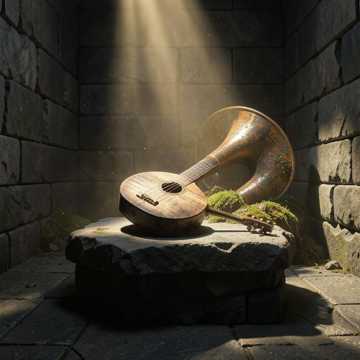
Stormhorn Lute
An instrumental cinematic folk composition driven by Viking-inspired percussion, hammered lute ostinatos, ritual chants, and thunderous dynamics. It evolves from a sparse, atmospheric opening into a triumphant finale filled with epic energy and immersive medieval-inspired textures.
03:38
1 days ago
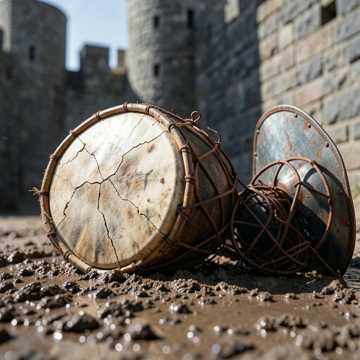
The Vanguard Clash (Instrumental)
A purely instrumental medieval battle composition where thunderous war drums and sharp field snares engage in a relentless rhythmic duel, building from a disciplined march into explosive warfare before fading into the haunting silence of the battlefield.
04:15
1 days ago
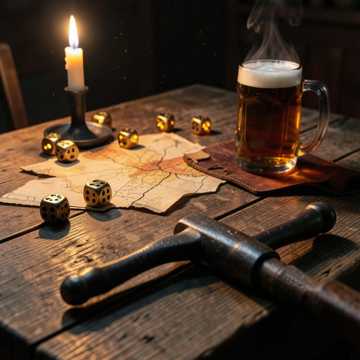
Cast F5
A theatrical medieval folk comedy following a Dragonborn and companions through disastrous adventures, constant party wipes, and endless reloads. Mixing solemn chants with lively tavern music, it celebrates RPG chaos, persistence, and the legendary power of the F5 quicksave.
07:03
1 days ago
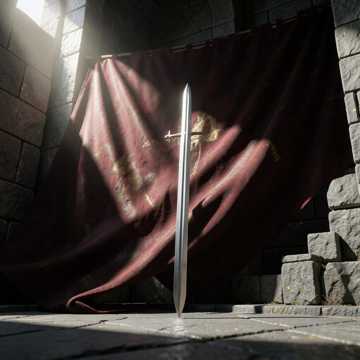
AEthelFlaed
A triumphant historical anthem honoring Aethelflaed's courage, leadership, and resilience. Blending epic pop-rock with medieval-inspired instrumentation, the song celebrates identity, strength, and the enduring legacy of a ruler who defied expectations and united her people.
04:10
1 days ago
Introduction to Medieval Music
Medieval music refers to the music of the Middle Ages, a period that spans from roughly the 5th to the 15th century. This genre of music emerged from the remnants of the Roman Empire and developed into a distinctive form that reflected the social, religious, and cultural transformations of Europe during that time. Medieval music can be broadly divided into two categories: sacred and secular. Sacred music was primarily connected to the church, including Gregorian chant and liturgical pieces, while secular music encompassed folk songs, ballads, and troubadour melodies. The development of notation systems, such as neumes, allowed for the preservation and dissemination of Medieval compositions, setting the foundation for Western music traditions.
Sub-tags and Classifications of Medieval Music
Gregorian Chant
Named after Pope Gregory I, Gregorian Chant is a form of plainchant used in the liturgical services of the Catholic Church. It is characterized by monophonic, unaccompanied vocal music with free-flowing, modal melodies. The chant's rhythm is non-metrical, designed to follow the natural inflections of the Latin text, enhancing the spiritual and meditative aspects of worship.
Troubadour Music
Troubadour music refers to the secular songs composed and performed by poet-musicians in the courts of Southern France, Northern Spain, and Italy during the 12th and 13th centuries. These songs often focused on themes of chivalry and courtly love, characterized by lyrical poetry and melodies. Troubadours played a significant role in shaping the tradition of lyrical composition and storytelling in Western music.
Organum
Organum represents one of the earliest forms of polyphony, where a plainchant melody is accompanied by one or more additional voice parts. Emerging in the 9th century, organum evolved from parallel movement to more complex forms, such as free and melismatic organum. This development marked a significant step towards the intricate polyphonic compositions of the later Medieval period.
Ars Nova
The Ars Nova ('New Art') movement of the 14th century introduced innovations in rhythmic notation, allowing for greater complexity and variation in musical compositions. This era saw the rise of isorhythmic motets and the use of syncopation, which laid the groundwork for the transition from Medieval to Renaissance music. Composers like Philippe de Vitry and Guillaume de Machaut were pioneers of this style, pushing the boundaries of musical form and expression.
Famous Artists and Classic Works in Medieval Music
Hildegard von Bingen
Hildegard von Bingen was a German Benedictine abbess, writer, and composer of the 12th century. She is renowned for her contributions to sacred music, particularly her collection of compositions known as 'Symphonia armoniae celestium revelationum.' Hildegard's works are characterized by soaring melodies and vivid texts, which often drew upon her mystical visions, blending religious devotion with musical innovation.
Messe de Nostre Dame by Guillaume de Machaut
This iconic work is one of the first known polyphonic settings of the complete Mass Ordinary. Composed in the mid-14th century, 'Messe de Nostre Dame' showcases Machaut's mastery of polyphony and rhythmic sophistication. The composition includes movements like the Kyrie and Gloria, characterized by their complex interweaving of vocal lines and innovative use of isorhythmic techniques, which were revolutionary for their time.
Guillaume de Machaut
A leading figure of the Ars Nova movement, Guillaume de Machaut was a French poet and composer of the 14th century. His most famous work, 'Messe de Nostre Dame,' is the earliest known complete setting of the Ordinary of the Mass by a single composer. Machaut's use of intricate polyphony and rhythmic complexity in both sacred and secular music significantly influenced the transition to Renaissance music.
Carmina Burana
Although not strictly a single work but a collection of 13th-century poems set to music, 'Carmina Burana' provides insight into the secular music of the Medieval period. These pieces, written by Goliards—students and clerics—cover topics ranging from satire to love. The vibrant melodies and rhythmic patterns in 'Carmina Burana' highlight the lively and sometimes irreverent spirit of Medieval secular music.
Perotin
Perotin was a prominent composer of the Notre Dame School of polyphony in the late 12th and early 13th centuries. He is known for his development of organum, particularly the composition of multi-voice pieces such as 'Viderunt omnes.' Perotin's works exemplify the early stages of polyphonic music, characterized by their harmonic complexity and structural clarity.
Viderunt omnes by Perotin
A seminal example of early polyphonic music, 'Viderunt omnes' by Perotin is a four-voice organum composed for the Feast of the Circumcision. This work demonstrates the complexity of Notre Dame polyphony, with its layered vocal lines and dynamic interplay of melodic motifs. Perotin's composition illustrates the evolution of Medieval music from monophonic chant to richly textured polyphonic structures.
Application Scenarios for Medieval Music
Medieval music is frequently used in historical and fantasy films to create an authentic atmosphere that transports audiences to the Middle Ages. Films like 'The Name of the Rose' and 'Kingdom of Heaven' utilize Gregorian chants and medieval instrumentals to enhance the storytelling, providing a sense of time and place that aligns with the narrative.
Movie Soundtracks
Many video games set in medieval or fantasy worlds, such as 'The Elder Scrolls' series or 'Assassin's Creed,' incorporate Medieval music into their soundtracks. This genre helps to immerse players in the game environment, evoking the sounds of ancient castles, bustling medieval markets, and epic battles, thus enriching the overall gaming experience.
Video Game Background Music
Medieval music plays a crucial role in themed events such as Renaissance fairs, historical reenactments, and medieval banquets. Performers use traditional instruments like the lute, harp, and hurdy-gurdy to recreate the soundscapes of the Middle Ages, providing an authentic auditory backdrop that enhances the atmosphere and educational value of these events.
Themed Events and Reenactments
The calming and spiritual nature of Gregorian chant and other forms of sacred Medieval music makes it suitable for use in therapeutic and meditation settings. These compositions, with their repetitive structures and soothing harmonies, are often employed to promote relaxation, reduce stress, and aid in mindfulness practices.
Therapeutic and Meditation Settings